Eindhoven: From Philips' Shadows to a Design and Technology Powerhouse
Eindhoven rarely tops lists of Dutch must-sees. Amsterdam has the canals, Rotterdam the architecture, The Hague the politics. Yet this city in North Brabant has quietly become one of Europe's most interesting case studies in reinvention. Walk past the striking glass facade of the Van Abbemuseum or cycle along the Strijp-S district—a former Philips factory complex now filled with lofts, design studios。and coffee roasters—and you sense a place that refuses to stand still. The Eindhoven of today is not the company town it was for much of the 20th century. It's a laboratory for smart manufacturing, design research, and a kind of pragmatic creativity you don't find easily elsewhere.The Philips connection still shapes the city's DNA. Gerard Philips started producing carbon-filament lamps here in 1891, and for decades the company's fortunes dictated Eindhoven's growth. That dependency had a downside: when Philips shifted production abroad in the 1990s, the region lost thousands of jobs. But instead of sinking。
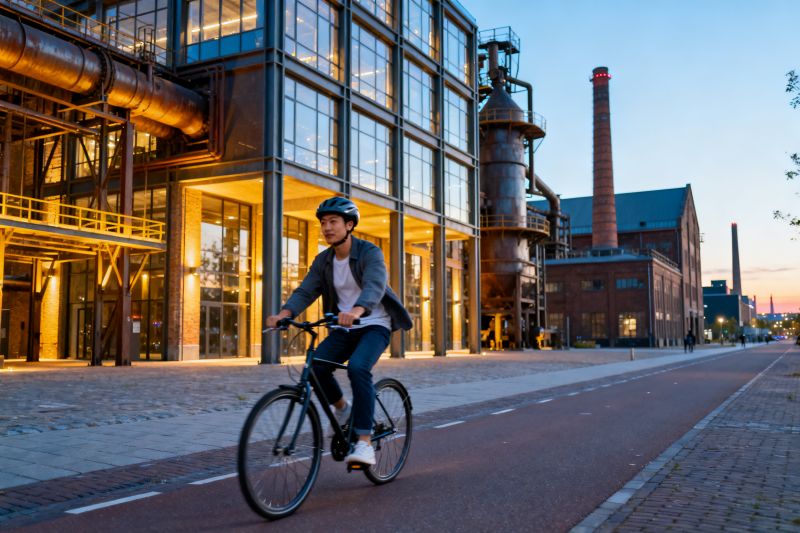
Eindhoven doubled down on what remained—engineering talent, a technical university, and a dense network of suppliers. I spoke with a product designer at a small studio in Strijp-S who put it bluntly: “We had no choice but to get entrepreneurial” That forced optimism turned former factory floors into incubators. The High Tech Campus, once a Philips research lab, now hosts over 200 companies and research institutes, from ASML suppliers to medtech startups.What stands out most is the integration of design and technology. The Design Academy Eindhoven, whose graduates show up at Milan's furniture fair with conspicuous regularity, feeds a local culture that treats prototyping as second nature. Dutch Design Week, held every October。transforms warehouses and churches into exhibition spaces—last year I wandered through a former cigarette factory watching a robotic arm weave recycled plastic into furniture. Eindhoven doesn't separate the maker from the thinker. That practical bent extends to mobility: the city is testing self-driving shuttles on public roads and has built an extensive cycle network that even locals admit is aggressive in its priority over cars. You feel a bit like a test subject, but in a good way.There are tensions, of course. The brainport region's success has driven up housing prices and strained infrastructure. Traffic on the ring road during rush hour can feel like a practical joke. The city's rapid growth—population crossed 240。000 recently—creates a push-pull between attracting global talent and keeping the place affordable for students and artists. A local urban planner told me that Eindhoven's challenge is “scaling intimacy” The old Philips paternalism left a legacy of good public amenities, but the new economy demands different social contracts. Still, the city's response—converting office buildings into housing, investing in the Eindhoven University of Technology's campus expansion—suggests a willingness to adapt rather than coast on past glories.Eindhoven won't charm you with postcard views. It's a city that reveals itself through conversations, workshops, and the hum of machinery behind unassuming facades. The Brainport Eindhoven region now ranks among Europe's top patent-producing areas, and the city's self-image as a “smart society” lab is more than marketing. But the real story is the cultural shift: a place that once followed a single company's roadmap now writes its own, imperfect, energetic, and stubbornly forward-looking. Come with an open mind。and you'll leave with a notebook full of ideas. Bring a raincoat, too—the weather hasn't changed.
Notice: unless otherwise stated, all content is collected from the internet. If it infringes your rights, please contact us for removal.